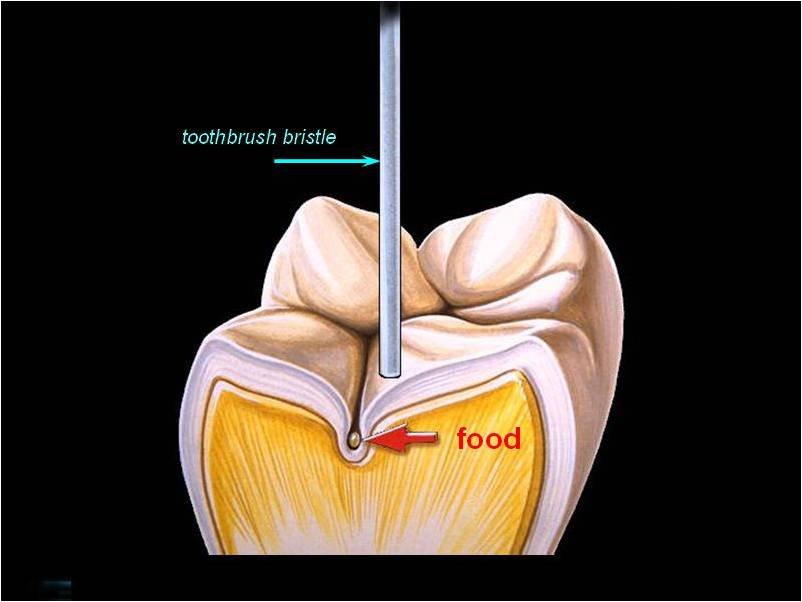
Deep Grooves and Pits are difficult to clean and may lead to cavities
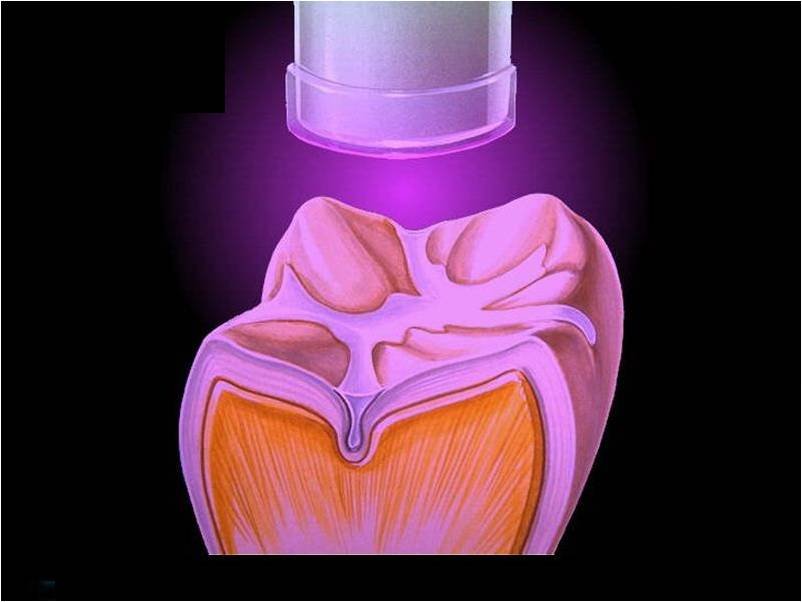
A flowable sealant is put into the grooves and hardened with Light.
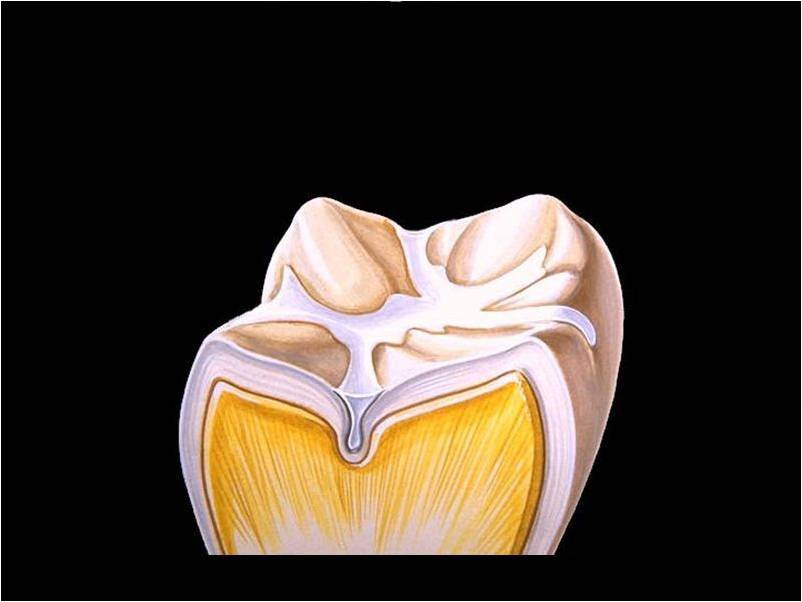
Sealed grooves are self-cleansing and are less prone to cavities.
Even if your child brushes and flosses carefully, it is difficult-sometimes impossible-to clean the tiny grooves and pits on certain teeth. Food and bacteria build up in these crevices, placing your child in danger of tooth decay. Sealants “seal out” food and plaque, thus reducing the risk of decay.
Q: How long do sealants last?
Research shows that sealants can last for many years if properly cared for. Therefore, your child will be protected throughout the most cavity-prone years. If your child has good oral hygiene and avoids biting hard objects, sealants will last longer. Your pediatric dentist will check the sealants during routine dental visits and recommend re-application or repair when necessary.
Q: What is the treatment like?
The application of a sealant is quick and comfortable. It takes only one visit. The tooth is first cleaned. It is then conditioned and dried. The sealant is then flowed onto the grooves of the tooth and allowed to harden or hardened with a special light. Your child will be able to eat right after the appointment.
Q: Which teeth should be sealed?
The natural flow of saliva usually keeps the smooth surfaces of teeth clean but does not wash out the grooves and fissures. So the teeth most at risk of decay-and therefore, most in need of sealants- are the six-year and twelve-year molars. Many times the permanent premolars and primary molars will also benefit from sealant coverage. Any tooth, however, with grooves or pits may benefit from the protection of sealants. Talk to the pediatric dentist in noida at Dentessence Dental Care, as each child’s situation is unique.
Q: If my child has sealants, are brushing and flossing still important?
Absolutely! Sealants are only one step in the plan to keep your child cavity-free for a lifetime. Brushing, flossing, balanced nutrition, limited snacking, and regular dental visits are still essential to a bright, healthy smile.
Q: What is age suitable for sealants?